ServicesRoof Replacement
Roof Replacement in Avon, IN
We put on a new roof only when repairs stop making sense. That means a full tear-off to the deck, new underlayment and flashing, and ventilation that actually moves air. First, we inspect the whole roof and tell you plainly whether a repair would serve you better.
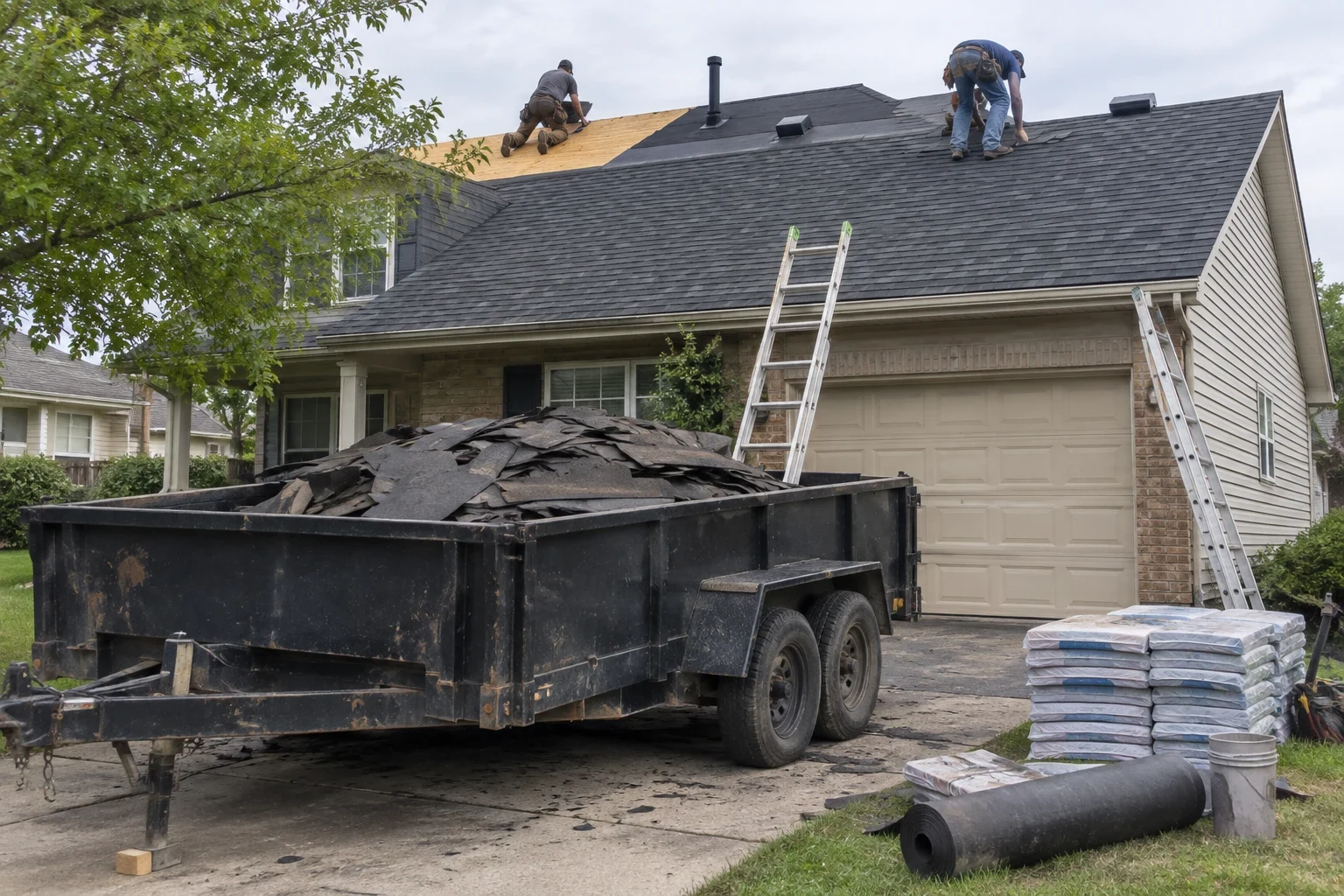
When a new roof is the right call
A single leak, a few missing shingles or a cracked pipe boot is usually a roof repair job. A new roof makes sense when the old one is worn out as a system, and patching one spot just moves the problem a few feet over.
The signs are physical. Asphalt shingles shed their granules over time, exposing the fiberglass mat to UV light. The asphalt dries out, and shingles that once flexed now crack when we lift a tab to nail in a neighbor. At that point a repair can damage more than it fixes. Every finding goes into a set of photos, so the evidence sits in front of you instead of resting on our word.
Indiana winters add another layer. Freeze-thaw cycles push water into every gap in a tired roof, and ice dams back meltwater up under the bottom courses. A new roof gets an ice barrier at the eaves, which is often the part older roofs are missing.
What goes into a new roof
Tear-off down to bare deck
We remove every old shingle layer and all underlayment until the sheathing is bare. Roofing over an old roof hides soft decking and traps heat, so we advise against it.
Deck inspection and repair
With the deck exposed, we walk it and test any spots that feel soft or delaminated. Rotted OSB or plank boards are cut out and new sheathing goes in before the next layer.
Ice barrier and synthetic underlayment
Self-adhering ice and water membrane lines the eaves and valleys, where ice dams and heavy runoff hit hardest. Synthetic underlayment covers the rest, since it holds up to foot traffic and lies flatter than felt.
All-new flashing at every transition
We install new drip edge, step flashing at walls, pipe boots and chimney flashing. Tired flashing is behind many leaks, so no old piece gets reused on a new roof.
Balanced attic ventilation
We size soffit intake and ridge or roof vents to work as a pair. Poor attic airflow cooks shingles from below in summer and causes condensation and ice dams in winter.
Your pick of roofing material
Most homes do well with architectural asphalt shingles, explained on our shingle roofing page. The metal roofing page covers standing seam and other panels, and low porch or addition roofs may call for TPO roofing.
Signs your roof is near the end of its life
Bald patches and granules in the gutters
Heavy granule buildup in your gutters or dark, smooth patches on the slopes mean the protective layer is gone. Exposed asphalt breaks down quickly after that.
Curling, cupping or cracked shingles
Edges that lift or centers that dip show the shingles have lost their flexibility. Wind gets under curled edges, and cracked tabs let water reach the mat.
Leaks in more than one place
One leak is a repair. Stains appearing in different rooms over a season or two usually point to a roof failing across the field.
Soft or sagging deck
A roofline that dips between rafters, or spots that feel spongy underfoot, often means the sheathing has absorbed water for a long time.
A long list of past patches
If your roof has been repaired several times in recent years, the money may be better spent on a roof that starts over. We will price both options so you can compare.
How the job runs
- 1
Free inspection and a straight answer
We go up on the roof, check the attic if you allow it, and photograph what we find. If a repair will hold for years, we say so.
- 2
Written, line-item estimate
You get each part of the job listed: tear-off, sheathing allowance, underlayment, flashing, vents and shingles. We walk through material options and explain how each one performs.
- 3
Permit, materials and scheduling
Where the town or county requires a permit, we pull it. Materials are delivered close to the start date, and we watch the forecast to avoid opening a roof ahead of rain.
- 4
Tear-off and dry-in
We cover landscaping with tarps and shield walls and windows before stripping. We only open as much roof as we can dry in with underlayment by the end of the workday, so your home is never left exposed overnight.
- 5
Install, walk-through and cleanup
After the shingles, ridge cap and vents go on, we walk the finished roof with you. Debris goes in the dumpster, and a rolling magnet passes over the lawn, beds and driveway to pick up loose nails before we leave.
What decides the price of a new roof
Every roof gets priced from its own measurements and condition, so the quote follows the inspection. The estimate spells out the items behind the total, and financing is available if you would rather pay over time.
- Size and pitch
- Square footage sets how much material and labor go into the job. A steep pitch means harnesses, roof jacks and a slower pace.
- Layers already on the roof
- Two layers of shingles roughly double the tear-off and disposal. We count layers at the eave during the inspection.
- Decking condition
- Rotten sheathing is only fully visible after tear-off. Your estimate lists a per-sheet price, so you see and approve the cost of each new sheet before it is billed.
- Your choice of material
- Architectural shingles, metal panels and TPO membrane differ in material cost, labor and how long they last.
- Roof complexity
- Each valley, dormer, skylight and chimney needs cutting and flashing. A plain two-slope roof goes faster per square than a hip roof with many dormers and valleys.
New roof questions we hear often
Something not covered here? (317) 943-0168
Can I save by shingling over the old roof?
It costs less up front, but we advise against it. A second layer conceals rotten sheathing, traps heat that ages the new shingles early and rules out ice and water membrane at the eaves. A tear-off costs more at first, but it lets us repair the deck before the new roof goes on.
How long does a new roof take?
One to three working days on most single-family homes. The size, the pitch and the amount of rotten sheathing set the pace. If rain pushes back the start, we call you to choose another date.
Will insurance pay for a new roof?
Most policies cover sudden damage such as hail or wind, not wear from age. We work with homeowners and insurance companies on storm damage claims and document our findings so your adjuster has clear evidence. Our storm damage repair page explains more.
Do I need to be home during the work?
No, though we ask you to clear cars from the driveway and stay reachable by phone. It also helps to take fragile items off upstairs walls, since hammering can shake them down.
How do I know you won't sell me a roof I don't need?
We open every inspection by asking whether a repair will do the job. If it will, we price the repair. If it won't, we show you the photos and give you the specific reasons.
Find out if a repair will do or your roof is done
We will inspect the whole roof, photograph what we find and give you an honest answer, whether that's a repair or a new roof. We work in Avon and nearby towns like Plainfield, Brownsburg and Danville.