ServicesRoof Inspections
Roof Inspections in Avon
We walk your roof, check the attic side when we can and photograph every problem we find. You get a clear answer on what is failing, why it is failing and whether a targeted repair will fix it before anyone mentions a new roof.
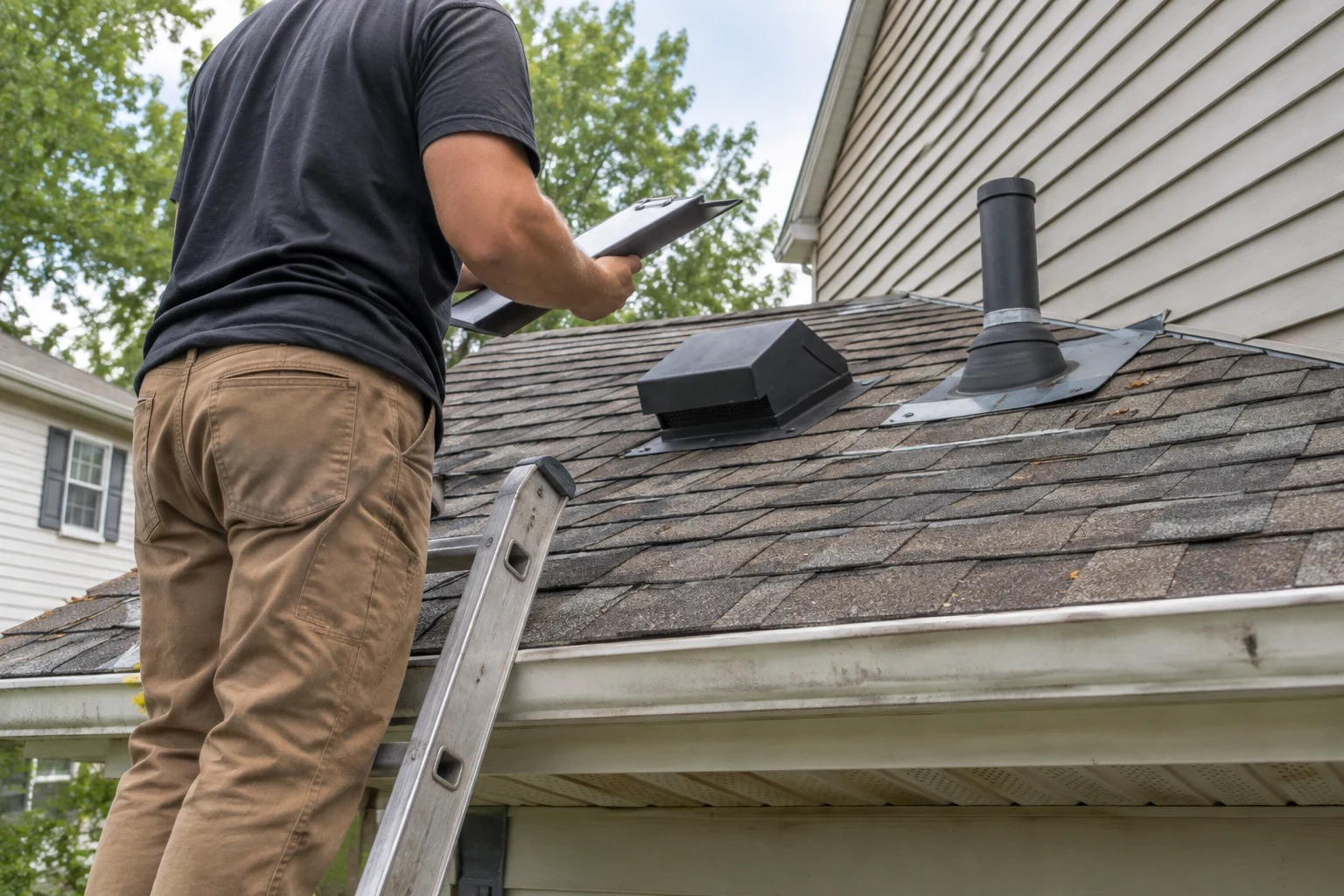
What an Inspection Tells You
Most roof trouble starts small: a cracked rubber boot around a plumbing vent, a lifted shingle tab, a run of exposed nail heads. Water finds those openings long before a stain shows on your ceiling. An inspection catches them while the fix is still a few hours of work.
Our default answer is repair. If the shingles still have granules, the decking is solid and the problem is limited to one area, we will tell you to fix that area and leave the rest alone. When the roof is near the end of its life, with widespread granule loss, brittle tabs or soft decking in several spots, we explain why patching would only buy a season and show you the photos that back that up.
Homeowners in Avon and nearby towns like Plainfield and Brownsburg usually call us before selling or buying, after a hard winter or when a ceiling spot appears. Any of those is a good reason.
Parts of the Roof We Examine
- 01
Shingles and seal strips
We check the field of shingles for bare spots where granules have worn away, edges that curl or crack, and tabs no longer bonded by their factory adhesive strip. An unbonded tab is the one most likely to fold back and tear when the wind picks up.
- 02
Flashing and roof penetrations
Metal flashing where the roof meets a wall, chimney counterflashing, rubber pipe boots and exhaust vent collars all get close attention. Leaks begin at these joints far more often than mid-slope, and each one can usually be resealed or swapped out by itself.
- 03
Valleys, ridge caps and drip edge
Two slopes drain into every valley, so that is where shingles wear thinnest and underlayment shows through first. At the top we look over the ridge caps, and at the bottom the metal drip edge that steers runoff into the gutter.
- 04
Attic airflow and sheathing
Inside the attic we watch for light showing through at nail rows, sheathing that is damp or stained dark, frost on nail tips and soffit vents buried in insulation. A roof that cannot breathe overheats its shingles in July and builds ice at the eaves in January.
- 05
Gutters and downspouts
When gutters overflow or sag away from the house, water runs behind the fascia and soaks the roof edge. We record clogged runs, loose hangers and downspouts that empty right beside the foundation.
Questions about Roof Inspections?
Call(317) 943-0168When It Is Time to Have Your Roof Checked
Sandy grit at the downspouts
Coarse granules collecting in the gutters or washing out of the downspouts are the shingles' protective coating coming off. A new roof sheds a little; an aging roof shedding a lot is wearing out.
Stains on a ceiling or in the attic
A brown ring on drywall or a patch of wet insulation means water already has a path inside. That path usually starts well upslope of the stain, so we follow it from the shingles downward.
Heavy ice at the eaves
A thick ridge of ice along the roof edge means warm air is leaking into the attic and melting snow from below. The meltwater pools behind the ice and creeps under the shingles, and the harm may not show until spring or summer.
Shingles in the yard or folded tabs
After high wind, walk the lawn and look up at each slope. A tab with a straight crease across it has torn free of its seal and will flap again in the next gust.
A home sale or purchase
Knowing the roof's condition before closing lets you negotiate repairs into the price rather than paying for them later.
What Happens During Your Inspection
- 1
Your call and a visit time
Let us know what caught your attention and roughly when the roof went on, if that is on record. We pick a time that works for you, and nobody needs to climb up or go into the attic with us.
- 2
Slopes, valleys and edges
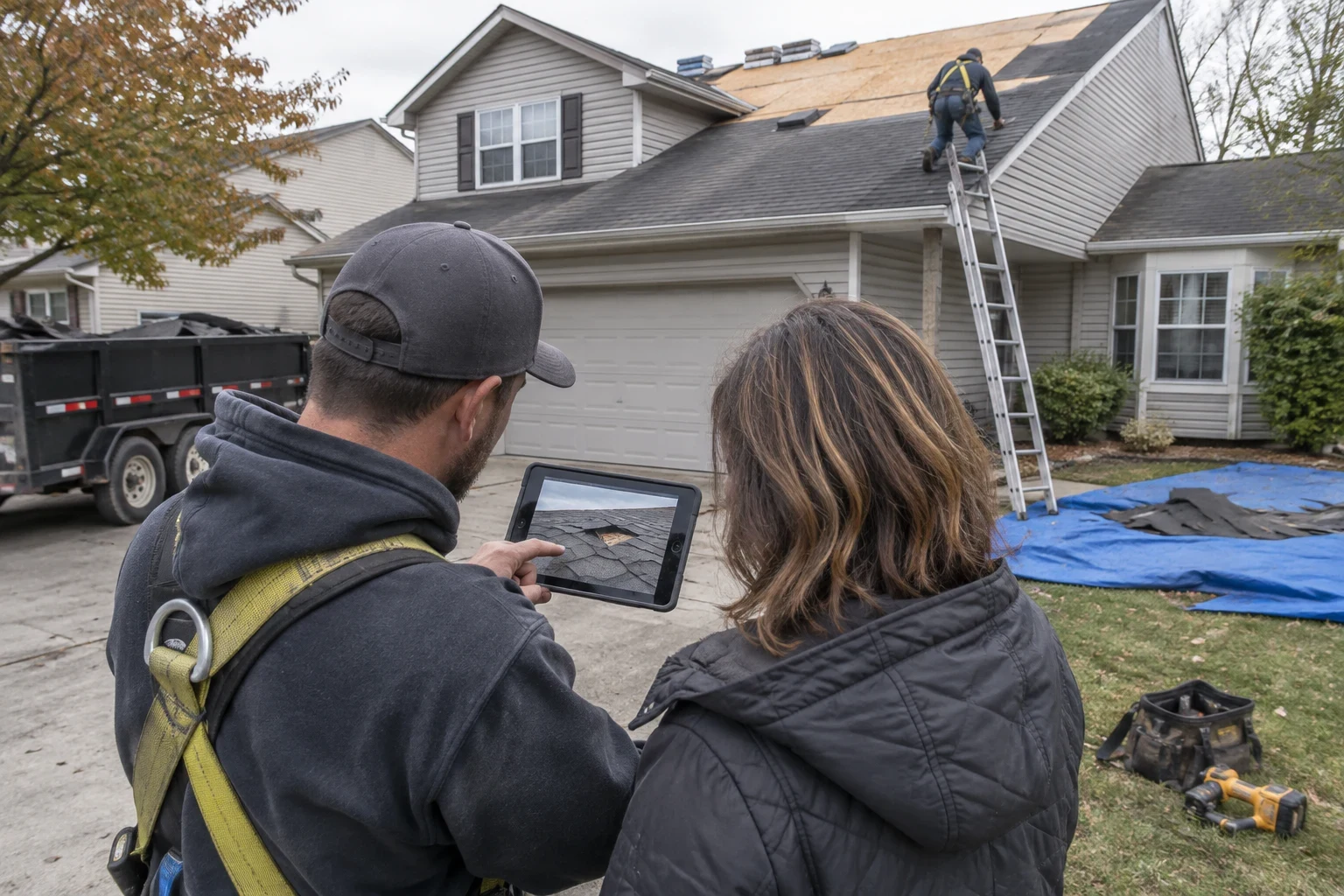
When the pitch and conditions make it safe, we walk the roof. When they do not, we work from ladders and take close-up photos. Each slope, valley and penetration is looked over.
- 3
Inside the attic
With an access hatch, we examine the underside of the sheathing, the insulation and the vents. That is where we confirm whether a suspected leak is actually active.
- 4
Photos and our recommendation
We go through the photos with you, explain each problem and its cause, and tell you what we would do. Any needed work comes with a written estimate itemized line by line, so you choose what gets done and on what timeline.
What Affects the Price of Any Work We Find
There is no charge for the inspection and no obligation to hire us after it. If something does need attention, the price follows what we found and how far it reaches. Financing is available for bigger repairs or a full roof replacement.
- How much of the roof is involved
- Swapping out a single cracked pipe boot is quick work. Pulling and rebuilding the step flashing along an entire sidewall takes far more labor and material.
- Sheathing under the shingles
- When water sits on the plywood or OSB deck for long, the wood softens and rots. Those sections are removed and fresh sheathing is fastened down before any shingles can be laid over them.
- Roof pitch and how we reach it
- A steep slope, a second or third story, or tight access around trees and additions means extra fall protection and slower going.
- Finding a shingle match
- Older colors and discontinued product lines can be hard to locate, so a clean-looking repair sometimes covers a wider patch than the damage alone would call for.
Questions About Roof Inspections
Is there any charge for the inspection?
None. We look over the roof, walk you through the photos and explain our findings for free. If you choose not to go ahead with any work, nothing more is owed.
How long will you be at my house?
On an average single-family home we are usually finished in less than an hour. A large roof, a steep pitch or a trip into the attic can stretch that somewhat.
Are you going to push a new roof on me?
No. When the rest of the roof is sound, we recommend roof repair. We bring up roof replacement only when the photos show wear across every slope, such as heavy granule loss or soft decking in several places, and we explain why a repair would not last.
Does an inspection help with a storm damage claim?
It is where a claim should start. We photograph hail bruises, wind-creased tabs and torn shingles, and we work with homeowners and insurance companies on storm damage claims. The adjuster still decides what is covered. Our storm damage repair page explains the steps after that.
How often should a roof be checked?
A yearly look is a good routine, and spring suits it best, once winter's freezing and thawing has done its work. Add a visit after any hailstorm or strong wind, and before you buy a home.
Find Out What Your Roof Actually Needs
We will check it top to bottom, photograph what we find and tell you plainly whether a repair will do. There is no charge for the visit.