ServicesGutters
Gutter Repair and Installation in Avon
Gutters protect your fascia, your foundation and the bottom edge of your roof. We find out why water is spilling, dripping or pooling, fix the failed seam, hanger or downspout when that solves it, and put in a new system only when repairs would not hold.
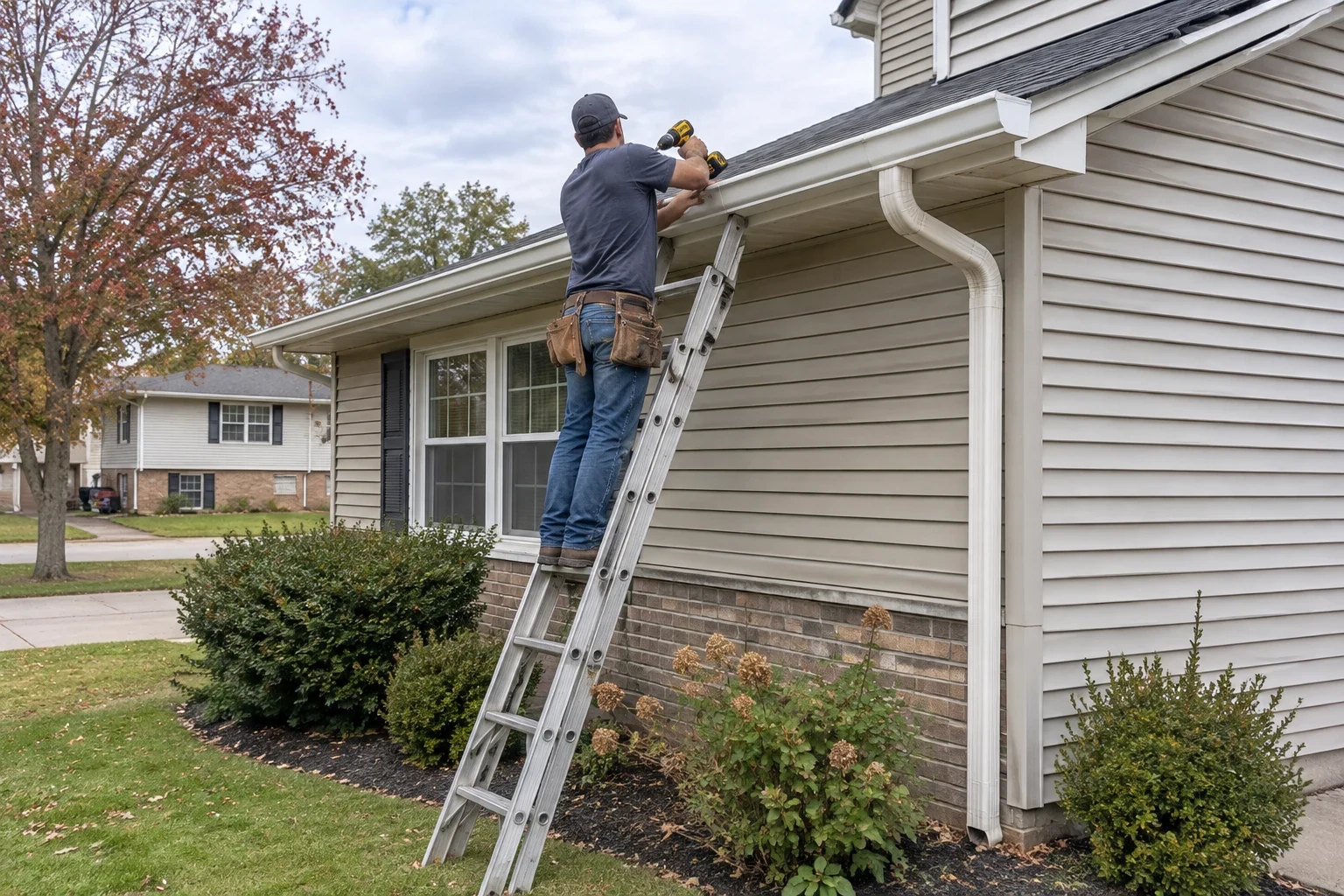
Gutter work that starts with the cause
Most gutter problems come down to one of four failures: a seam that has opened, hangers that have pulled loose, a run with the wrong pitch, or a downspout that cannot move the volume it receives. Each has a different fix, and most of them are repairs, not new gutters.
We look at the gutters as part of the roof. Water that overshoots a gutter often points to a missing drip edge or shingles trimmed too short. Water behind the gutter usually means rot in the fascia board. If the roof edge is the real problem, we tell you that, and our roof repair page covers that work.
When a system is split, rusted through or too small for the roof above it, we install new one-piece aluminum gutters formed on site to the length of each run, so there are no mid-run joints to leak.
The gutter work we do
Resealing seams and end caps
Old, cracked caulk comes out of the corner miters and end caps first. Once the joint is dry, it gets a fresh bead of gutter-grade sealant, and any loose rivets are replaced.
Rehanging and correcting pitch
Spikes and ferrules that have backed out are replaced with hidden hangers screwed into the fascia or rafter tails at about two-foot spacing. We then adjust the slope so water heads to the outlet rather than pooling mid-run.
Downspouts and outlets
Clogged elbows get cleared, small outlets get enlarged, and downspouts are added or extended so runoff is carried away from your foundation.
Fascia and drip edge checks
We test the fascia for soft spots before any hanger goes in. Rotted boards are swapped for new lumber so the gutter is fastened to solid wood.
New one-piece aluminum gutters
If repairs will not hold, we run aluminum coil through a forming machine at your home to make one continuous length per run. Each system is sized to the roof area and pitch and goes up with new hangers and downspouts.
Signs your gutters need attention
Drips at the corners
Steady drips from a miter or end cap after rain mean the sealant has failed. That is usually a straightforward reseal.
Sagging or pulling away
A run that bows between hangers or leans off the fascia has lost its fasteners. Ice and wet leaves add weight that finishes the job if it is left alone.
Water spilling over the front
Overflow in a moderate rain points to a clog, a backward pitch or a downspout too small for the roof area feeding it.
Peeling paint or stains on the fascia
Water getting behind the gutter soaks the fascia and soffit. Caught early, it is a board replacement, not a rafter repair.
Puddles or erosion at the foundation
Washed-out mulch or a wet basement wall below a downspout means water is being dumped where it does the most harm.
Ice buildup along the edge
Central Indiana freeze-thaw cycles turn standing water in a flat gutter into ice that bends hangers and backs water under shingles. We check pitch and attic ventilation together.
How a gutter visit runs
- 1
Inspection from the roof edge
We walk the gutter line, check every seam, hanger and outlet, and look at the drip edge and fascia behind it. You get photos of what we found.
- 2
Repair or replace, explained
We tell you which runs can be repaired and which cannot, and why. If repairs will hold, that is what we recommend.
- 3
The work day
Ladders go on stabilizers so they do not dent the gutter. Repairs typically finish in a single visit, and a full new install usually takes a day on an average house.
- 4
Water test and cleanup
We run water through each run to confirm it drains to the outlet, then pick up old fasteners, sealant scraps and cut-offs from your yard.
What sets the cost of gutter work
The price of gutter work tracks two things: how many feet of gutter are involved and what is actually wrong with them. Resealing and rehanging a few sections uses little material, so we price that option first when it will hold. Before anything starts, you get a written estimate broken out line by line. For bigger jobs, financing is an option.
- Run length and roof height
- Each extra foot means more aluminum and more hangers. A second-story eave calls for taller ladders and a slower, more careful setup.
- Repair or a new system
- Resealing seams and resetting hangers is mostly labor. Steel that has rusted through or aluminum that has split needs new one-piece runs.
- Fascia condition
- Rotted fascia must be replaced before hangers can hold, and we cannot price that until we probe the wood.
- Gutter size and downspouts
- Moving from 5-inch to 6-inch gutters, or adding downspouts and extensions, changes material cost.
Gutter repair and replacement: what homeowners ask
Something not covered here? (317) 943-0168
Water drips from my gutter corners. Is that a repair or a new system?
Corner miters and end caps are where most leaks start, and fresh sealant there usually stops them. A new system is worth it when the metal is rusted through, runs are warped or the gutter cannot handle the roof area above it. We photograph every trouble spot so you can judge our advice yourself.
Why do one-piece gutters leak less than sectional ones?
Store-bought sectional gutter has a seam roughly every ten feet, and every seam depends on sealant that dries out and cracks with age. Gutter we form from coil on site comes out as a single length, leaving joints only at the corners and end caps.
Do I need 5-inch or 6-inch gutters?
That comes down to the roof area feeding each run and the pitch. Water leaves a steep slope faster, so long runs below one often call for 6-inch gutters and bigger downspouts to handle a hard spring rain. We take measurements before suggesting a size.
Is it better to hold off on gutters until the roof is replaced?
When a new roof is close, doing the two at once lets the new drip edge and gutters line up the way they should. When the roof has years left, fixing the gutters now protects the fascia from rot until then.
Can you repair gutters a storm has damaged?
Yes. We work with homeowners and insurance companies on storm damage claims, and we photograph bent runs, broken hangers and any roof damage along the way. The full process is laid out on our storm damage repair page.
Find out what your gutters really need
We will check your gutters, fascia and roof edge, and tell you plainly whether a repair will do the job. The inspection costs you nothing.