ServicesMetal Roofing
Metal Roof Installation and Repair in Avon, IN
We put standing seam and exposed-fastener metal roofs on homes, and we fix existing metal roofs too. On older metal roofs, leaks usually come from tired screws and trim rather than the panels, so we look there first and give you a plain answer on what the roof needs.
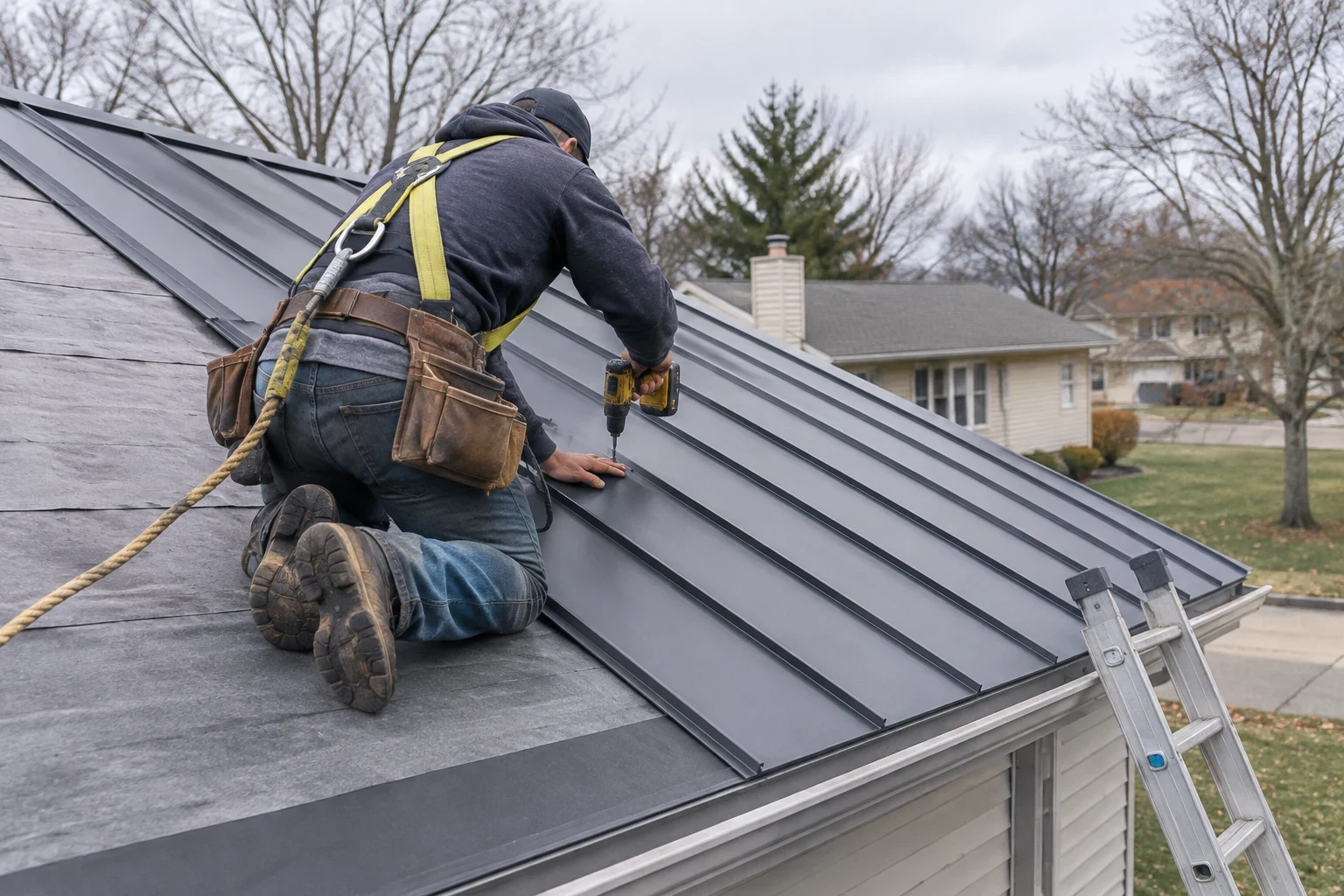
A metal roof is a system, not just a panel
Metal sheds snow, resists wind uplift and does not curl or lose granules the way asphalt does. It only performs that way when the parts you never see are right: a high-temperature underlayment, clips or fasteners that let the panels move as they heat and cool, and flashing at every wall, valley and pipe. We install all of it, and we explain why each piece is there.
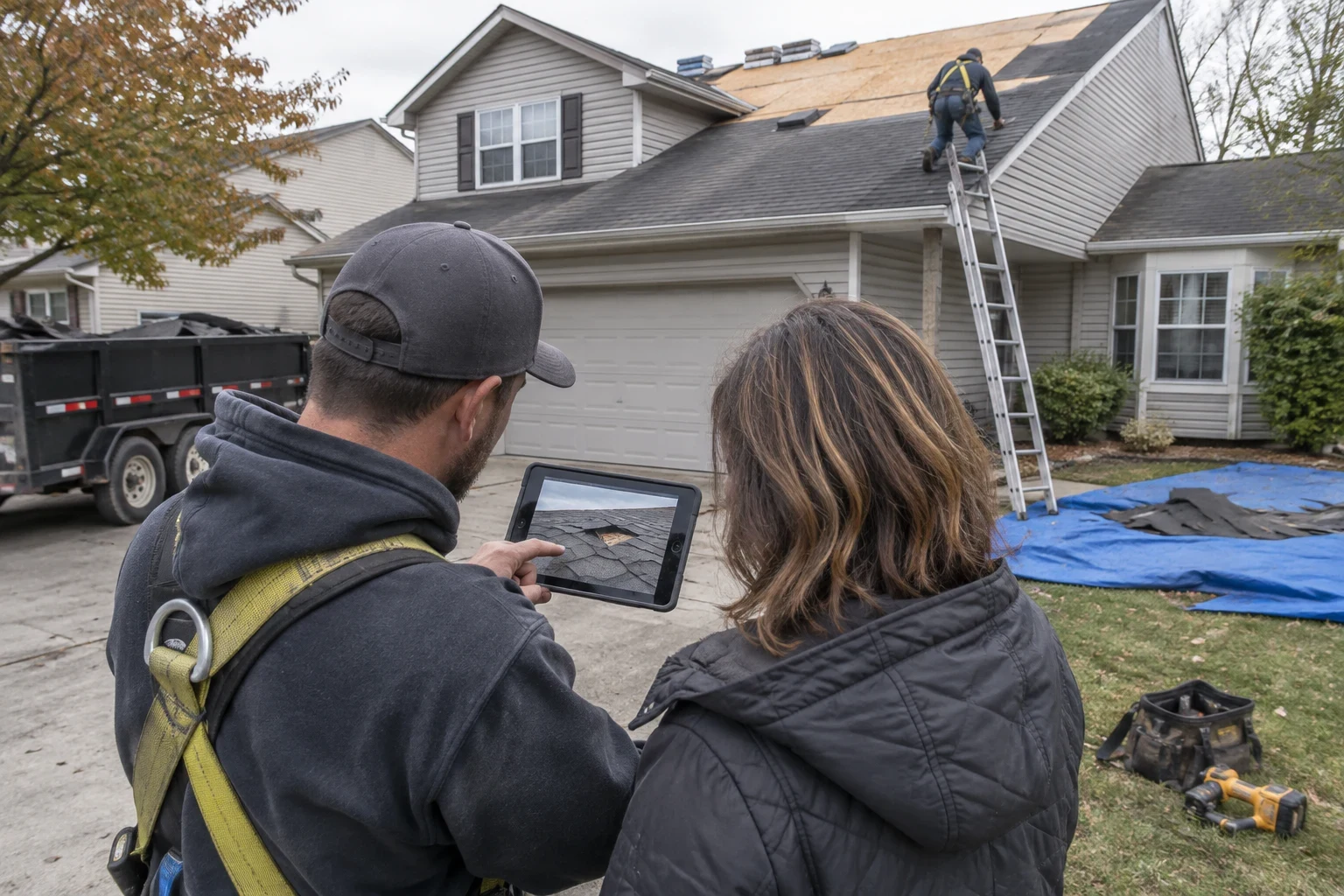
If you already have a metal roof that leaks, replacement is rarely the first answer. On screw-down panels, the rubber washers under each screw head dry out and crack after years of sun, and screws back out as the panels expand and contract. Swapping those fasteners for oversized screws and resealing the trim usually stops the leak. When panels are rusted through or the deck underneath has gone soft, we will say so, show you photos and explain why a new roof is the better spend.
For homes moving from asphalt to metal in Avon, Plainfield or Brownsburg, we walk you through panel profiles, metal thickness and finish options before anything is ordered. If metal does not suit your roof or budget, our shingle roofing page covers the alternative.
What our metal roofing covers
- Standing seam systems
- These concealed-fastener panels interlock at raised seams and are held to the deck by clips. The clips allow each panel to move with heat and cold, so no screws pierce the weather surface and no washers can wear out.
- Screw-down panels
- Exposed-fastener panels are attached through the flat of the sheet using screws with washers. They are cheaper to put on, but over the roof's life the screws need checking and some need replacing, and we tell you that from the start.
- Deck prep and underlayment
- Because metal gets hot in summer, we lay a high-temperature synthetic underlayment instead of felt. Ice and water membrane goes at the eaves and in the valleys, where ice dams and heavy runoff drive water upward. Soft or delaminated decking is removed and replaced with new sheathing before the panels are installed.
- Trim, flashing and ridge
- We install eave and rake trim, valley metal, counterflashing at sidewalls and chimneys, and a vented ridge cap with closure strips that block insects and blowing rain. Pipes get boots built to flex along with metal panels.
- Ventilation and snow guards
- Snow slides off metal all at once. We put snow guards over doorways, decks and walkways, and we match intake and exhaust vents so the attic under the panels stays dry.
- Fixing metal roofs you already have
- Oversized replacement fasteners, resealed seams and trim, a refastened ridge cap and rebuilt flashing are often all an older metal roof needs to keep going for years.
Signs your metal roof needs attention
Rust streaks below screws
Orange runs beneath fastener heads mean the washer has failed and water is reaching the steel around the hole. Caught early, this is a fastener swap, not a new roof.
Drips along a line of screws
Ceiling stains that follow a straight line usually sit right under a row of fasteners. Loose screws let water track along the panel ribs and in through the holes.
Lifting trim or ridge cap
Strong wind gets under loose edge trim and ridge cap and can peel it back. Once it lifts, rain blows in at the eaves and ridge.
Buckled or wavy panels
Some waviness, called oil canning, is cosmetic. Panels that bulge or buckle can mean the clips or fasteners are pinning them so they cannot expand, which stresses the seams.
Hail dents or punctured seams
Most hail dents are cosmetic, but a split seam or cracked finish lets corrosion start. Our storm damage repair page covers how we document hail damage.
An asphalt roof failing again
If your shingle roof is near the end of its life, that is a good time to price metal against shingles and decide with real numbers.
What decides the cost of a metal roof
Metal costs more up front than asphalt, and prices vary widely from one metal system to another. Each part of the job has its own line on our written estimate, so you know the total before you sign. Financing is available if monthly payments work better than a single large one.
Panel style and thickness
Standing seam on hidden clips costs more than exposed-fastener panels. Thicker steel resists dents better and also adds cost.
Roof shape
Hips, valleys, dormers and skylights mean more cut panels, trim and labor. A simple gable goes up fastest.
Removal and deck work
Removing old shingle layers and re-sheathing rotted spots adds cost, and the full extent only appears once the deck is exposed. We flag likely trouble areas during the inspection.
Finish
A premium fluoropolymer coating holds its color and resists chalking longer than a standard polyester paint, at a higher price.
Extras
Snow guards, ridge vents, extra pipe boots and chimney flashing each add to the total.
How a metal roofing job runs
- 1
Free roof inspection
We go up on the roof, check fasteners, seams, flashing and the deck where we can see it, and take photos. You get a straight answer on whether repair will do or replacement makes more sense.
- 2
Written estimate
The estimate lists the panel profile, metal thickness, finish, underlayment, flashing and any deck work as separate lines. You pick a color from real samples, not a screen.
- 3
Tear-off and deck repair
We protect landscaping and the walls of your home with tarps, remove the old roofing down to the deck and renew any soft sheathing. Underlayment and ice and water membrane go on the same day the deck is opened.
- 4
Panels, flashing and ridge
Panels are cut and set square to the eave, then trim, valley metal, wall flashing, pipe boots and ridge cap are installed. On a standing seam roof, each seam is checked for full engagement.
- 5
Cleanup and walkthrough
We sweep the yard and driveway with magnets for screws and metal shavings and haul away the old material. Then we walk the job with you and share photos of the finished details.
Metal roof questions we hear
Will a metal roof be noisy when it rains?
Far quieter than most people expect. The drumming people imagine comes from barns and sheds, where thin sheets sit on open purlins with nothing under them. On a home, the panels lie over a solid deck, underlayment and an insulated attic that soak up most of the sound, so rain sounds about like it does on asphalt shingles.
Can metal go over my existing shingles?
Sometimes, but we usually recommend a tear-off. Removing the shingles lets us find soft decking and add ice and water membrane at the eaves, and it keeps bumps from the old shingles from showing through the panels. We will tell you what we see on your roof and why.
Will hail dent a metal roof?
Large hail can dent metal, thinner panels especially. Most dents are cosmetic and do not affect drainage, but a split seam or cracked finish needs repair. We work with homeowners and insurance companies on storm damage claims and can document the damage for your adjuster.
Does a leaking metal roof need replacing?
Usually not. Most leaks come from worn screw washers, loose fasteners or failed trim sealant, and those can be fixed. We recommend a new roof only when panels are rusted through or the deck below has failed, and we show you the photos when that is the case.
Are metal roofs more likely to get hit by lightning?
No. Lightning goes for height and the easiest path to ground, and roofing material plays little part. In the rare case of a strike, steel panels are noncombustible and won't catch fire the way wood shakes or a dry deck could.
Find out what your metal roof actually needs
We will check the fasteners, seams and flashing, take photos and give you an honest repair-or-replace answer. If you are weighing metal for a new roof, we will price it clearly against your other options.